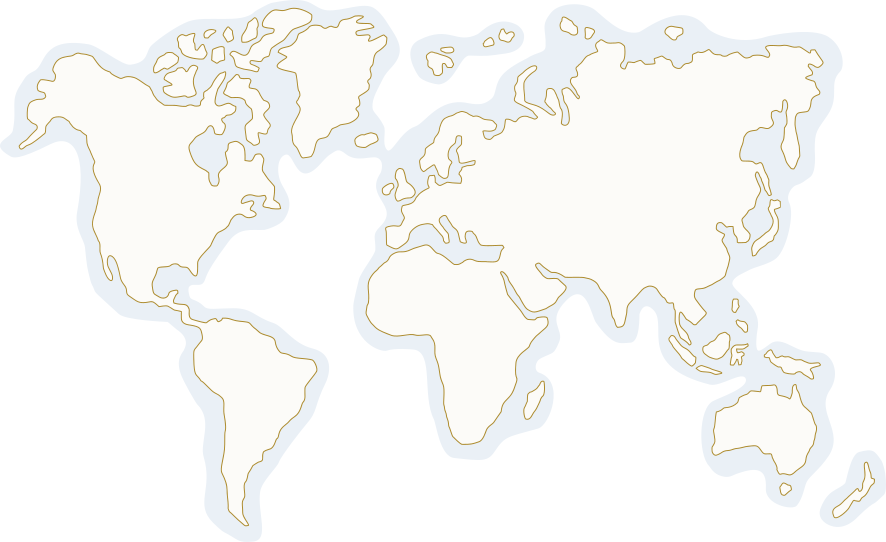
Thrace is a land that has endured the currents of history, maintaining its unity and significance from antiquity through the age of Alexander the Great, the Roman rule, the Byzantine era, and the Ottoman dominion. Situated at the crossroads of Europe and Asia, Thrace is far more than a geographic region—it has been a meeting ground of civilizations, a hub of cultural exchange, and a beacon of continuity in an ever-changing world.
An enigmatic borderland, it has been the stage for centuries of cultural clashes, religious intersections, and shifting power dynamics. From the grandeur of Byzantine Constantinople to the bustling modern-day Istanbul, Thrace has been a seat of power, a focal point of religious evolution, and a bastion of strategic importance. Its landscapes, scarred by countless invasions and territorial disputes, reflect its timeless role as both a bridge between worlds and a fiercely contested frontier.
A living tapestry of Biodiversity
Natural Landscapes Waiting to Be Discovered
Thrace is a country of diverse natural landscapes. Picturesque coastlines along the Aegean and Black Seas demarcate its expanse. In its interior, rugged mountains alternate with fertile plains. Virgin forests offer a refuge to wild species away from bustling settlements. Pristine rivers run through its land and end in protected habitats with countless species of birds and plants.
Wild nature dominates Thrace and has inspired people to create myths and legends about the creatures that inhabited its heart. Even today, untouched by mass tourism, its forests and wildlife offer a tranquil escape for nature lovers and adventure seekers.
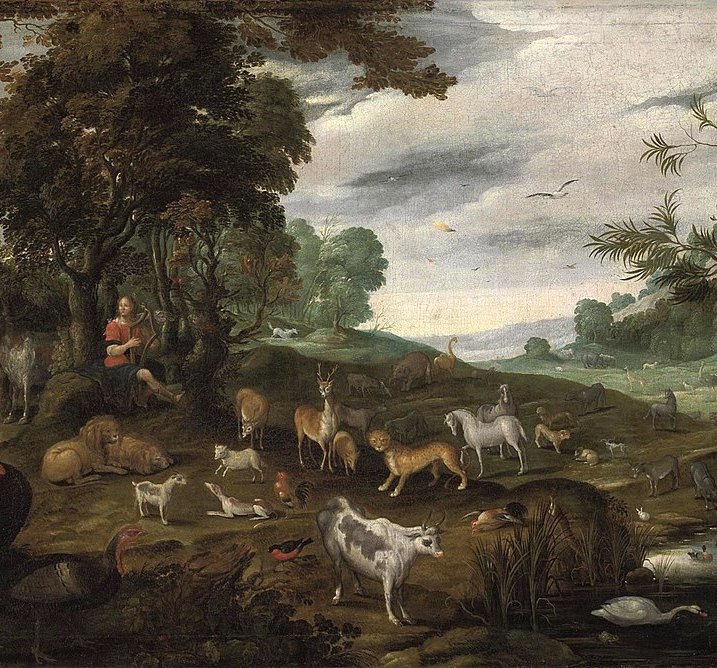
Orpheus charming the animals (detail), by Frederik Bouttats the Younger
Myths, Mysteries and Mystique
The Untamed Nature as the Cradle of Mysticism
Thrace, with its wild forests, serene rivers, and sacred mountains, has long been a land where nature and the divine intertwine. From the myths of Orpheus and the Dionysian rites to the secretive Kaviria mysteries, ancient Thrace was a center of spiritual exploration. Its landscapes inspired Orphism’s teachings on the soul and the sacred harmony of the cosmos.
With the rise of Christianity, monasteries emerged in Thrace's secluded hills, serving as sanctuaries of prayer, contemplation, and artistic creation. Later, the Bektashi Sufi order introduced Islamic mysticism to the region, expressing spirituality through poetry, music, and inward reflection, while embracing nature as a bridge to the divine.
Today, Thrace remains a living testament to its mystical heritage, where ancient rites and sacred traditions echo in the wild beauty of the land. It also stands as an example of ideal coexistence, where Christian and Muslim communities have shared the region’s spiritual and cultural landscapes for centuries. Notably, the region is still home to the second most important worldwide tekke (monastery) of Bektashism, where a thousand-year-old mulberry tree continues to stand, serving as a living symbol of unity, endurance, and spiritual harmony.
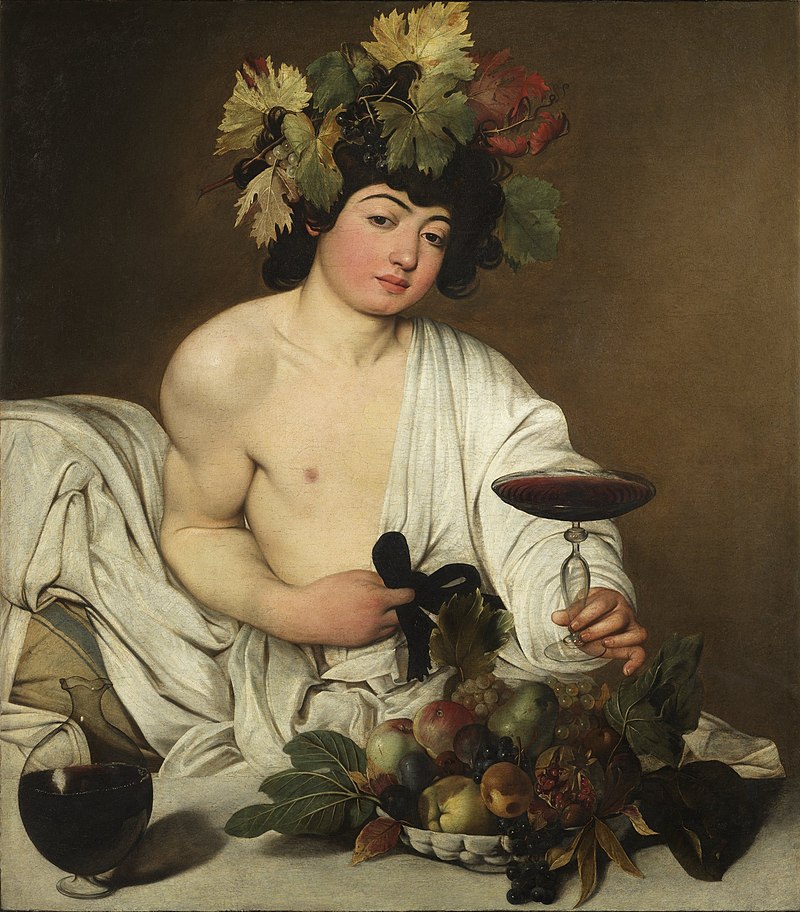
Dionysus in Bacchus by Caravaggio
Oracles and Shadows
The Thracians, one of Europe’s most enigmatic ancient peoples, believed in powerful gods, worshiped the mysteries of nature, and left behind stunning artifacts and ornate burial tombs. Stories of the Thracian god Zalmoxis, the rituals of the cult of Bendis, and the rumored treasures hidden in ancient vaults evoke an air of mystery that beckons explorers. Their legends gave the world Orpheus, the musician whose lyre could charm gods and mortals alike, and Dionysus, the god of wine and ecstasy, whose mysteries were born in Thrace’s wild landscapes.
The mythological past of Thrace is rich and deeply intertwined with ancient Greek mythology, where Thrace was often depicted as a land of wild beauty, mysterious rites, and powerful figures. The Thracians themselves had a strong oral tradition and a unique pantheon, bridging the greek world and the mystical traditions of the northern tribes. The Thracians' emphasis on music, ecstatic worship, and the afterlife has left an enduring mark on ancient and modern culture.
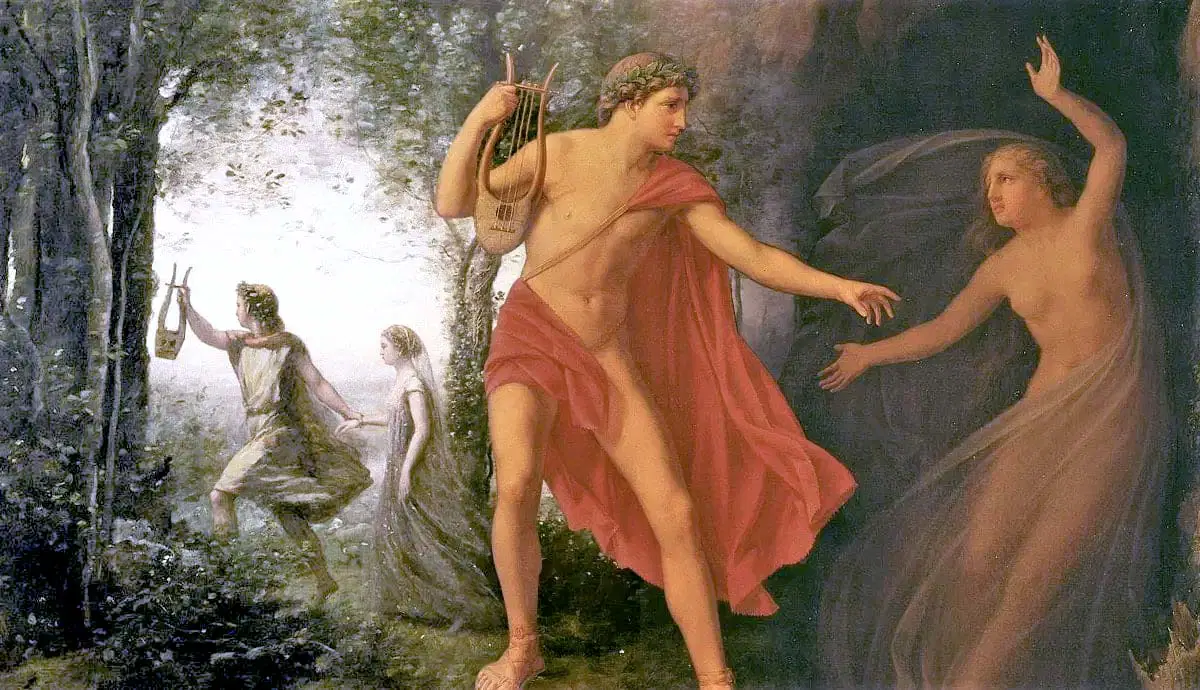
Orpheus and Eurydice by Carl Andreas August Goos
An Enchanting Land of Hidden Treasures
From Ancient Roots to the Alexandrian Era
Ancient Thracians and the Dawn of Classical Greece
In antiquity, Thrace was a land of independent tribes known for their warrior ethos, rich resources, and cultural dynamism. Renowned as cavalrymen and mercenaries, they engaged in trade with Greek settlers, fostering economic and cultural exchanges that shaped cities like Abdera, Maroneia, and Philippi. Hidden beneath its rolling hills and lush valleys are burial mounds, ancient cities like Seuthopolis, and sacred rock-hewn sanctuaries like Perperikon. The "Valley of the Thracian Kings" holds grand and mysterious tombs, yet largely unknown to the wider world.
Briefly under Persian rule, Thrace later became vital to Philip II and Alexander the Great, whose campaigns were fueled by its gold mines and warriors. The Hellenistic era brought prosperity, blending Greek and local traditions, setting the stage for Thrace’s enduring influence in the rise of the Roman Empire.
Roman Conquest of Thrace
From Frontier Land to Strategic Stronghold
Under Roman rule, Thrace became a vital corridor between Europe and Asia, strengthened by the Via Egnatia and key battles like Philippi (42 BCE), which cemented Roman control. Philippi later hosted Saint Paul’s first European mission (49–50 CE), marking the spread of Christianity. Cities like Adrianople and Traianoupolis flourished, while Thracian warriors and resources remained integral to the empire, blending Roman influence with local traditions.
Thrace in the Byzantine Era
Gateway to Constantinople and Pillar of an Empire
During the Byzantine era, Thrace became central to the empire, supplying Constantinople with grain and serving as a key defensive and economic hub. Cities like Adrianople and Philippoupolis flourished, while fortifications protected against invasions.
The Battle of Adrianople (378 CE) marked a turning point in imperial defense. Thrace also played a vital role in spreading Christianity, blending Roman governance, Greek culture, and Christian faith, solidifying its place as a cornerstone of the Byzantine world.
In the Shadow of the Crescent
From the Byzantine Emperors to the Ottoman Caliphs
Under Ottoman rule, Thrace became a key imperial center, with Edirne (1361) and later Istanbul (1453) reinforcing its strategic importance. Its fertile lands sustained the empire, while cities flourished as hubs of trade, governance, and culture. A melting pot of religions and ethnicities, Thrace blended Ottoman, Byzantine, and local traditions. As a military and economic corridor, it linked Europe and Asia until the 19th century, when Ottoman control waned, culminating in the Balkan Wars (1912–1913). Despite this decline, Thrace’s Ottoman legacy endures in its architecture and cultural heritage.
Tasting History
The Golden Mountain that shaped Legacies
The History of Philippi - A Crossroads of Civilization
Founded by Philip II in 356 BCE to control the gold mines of Pangaion Mountain, Philippi thrived as a strategic and economic hub on the Via Egnatia. After the Battle of Philippi (42 BCE), it became a Roman colony, flourishing with military settlers and infrastructure. Around 49–50 CE, Saint Paul preached there, converting Lydia, the first documented Christian in Europe. His visit and later epistle cemented Philippi’s significance in early Christianity.
Breakfast at Philippi
At Philippi, guests will enjoy a delightful breakfast accompanied by an archaeologist who, during the meal, will share captivating historical insights about this renowned UNESCO World Heritage Site, unveiling its rich history, from its founding by Philip II to its significance during the Roman era and early Christianity.
Paths to Serenity
Reconnecting with History on the Via Egnatia
Built in the 2nd century BCE by proconsul Gnaeus Egnatius, the Via Egnatia was a vital Roman road linking the Adriatic to Byzantium (Istanbul). Spanning over 1,100 km, it facilitated trade, communication, and military movement, shaping Roman, Byzantine, and Ottoman history. Its remnants still stand as a bridge between Europe and Asia.
An Alfresco Lunch with a View Through Time
The journey along the ancient Via Egnatia will culminate at an unforgettable lunch table set in a breathtaking spotwith panoramic views. Guests will enjoy a carefully curated meal prepared by our team of chefs, with all products sourced directly from the surrounding area. This dining experience will combine the flavors of the region with the beauty of the natural setting, creating a memorable conclusion to a day of history, culture, and connection with nature.
Discover the Secret World of a Pomak Village
A Living Testament to Balkan History
The Pomaks, a Muslim community in the Rhodope Mountains, embody the Balkans’ rich cultural fusion of Thracian, Slavic, and Ottoman legacies. Their origins remain debated, but their language, traditions, and history reflect resilience and multicultural heritage, preserving a unique identity amid shifting empires and modern Balkan states.
Today, visiting a Pomak village provides a rare opportunity to explore the enigmatic history of a people who have remained rooted in their traditions while adapting to the changing world around them. Their story is one of resilience, diversity, and the enduring spirit of the Balkans.
Traditional culinary experience
The Pomak excursion will center around an inspiring and interactive culinary experience, where the women of the village will collaborate with one of our experienced chefs to prepare the meal. This initiative not only provides guests with a taste of authentic Pomak cuisine but also offers the women knowledge and hands-on experience in professional cooking techniques.
By equipping them with valuable skills, this collaboration aims to foster a sense of professionalism and confidence, opening up opportunities for them to pursue careers in local restaurants and contribute to the region’s gastronomic identity. This meaningful exchange highlights the power of shared learning while celebrating the rich culinary heritage of the Pomak community.
Legends and Harmony
A Journey Through Lake Vistonida's Mysticism, History, and Faith
Lake Vistonida, a key wetland in Greece’s Natura 2000 network, is a vital stop on the Via Aristotelis migratory route, attracting birdwatchers worldwide. Near its shores lies ancient Abdera, birthplace of philosophers Democritus and Protagoras, once a major trade hub. The lake also symbolizes coexistence, home to the floating Monastery of Saint Nicolas and the Kioutoukli Baba Tekke, reflecting the region’s enduring harmony between Christian and Sufi traditions.
Visiting Lake Vistonida is more than a trip—it is a journey through the layers of Thracian identity. From the myth of Heracles to the intellectual legacy of Abdera, and from the shared spirituality of faith temples to the vibrant life of the wetlands, the lake is a living tapestry of the region’s past and present. As guests stand by its tranquil waters, they become part of a story that began with a stone and continues to inspire awe, reflection, and connection.
Sacred flavours
The lunch table near the Koutoukli Baba Tekke, set amidst a stunning field that showcases the region’s rich agricultural heritage, will offer a truly authentic experience by featuring dishes once enjoyed by the poorer communities of the past. These simple yet flavorful dishes reflect the ingenuity and resourcefulness of those who lived off the land, using locally sourced ingredients and time-honored methods.
Tracing the Flow of Time
Kayaking Through the Myths and Beauty of the Nestos River
The Nestos River, known as Nessos in mythology, traces its origins to the dawn of time as one of the many offspring of Oceanus and Tethys. Revered as a river god, Nestos nurtured the land and carried deep symbolic meaning in ancient lore. Herodotus noted it as the northernmost range of lions in Greece, adding to its wild majesty. It is also linked to the legend of Orpheus, who mourned Eurydice along its banks, making its waters a timeless symbol of sorrow and resilience.
The river’s path follows the historic Ottoman railway, a vital link between Europe and Istanbul that inspired the legendary Orient Express. Built by French and German engineers, this marvel of 19th-century engineering transformed the region into a bridge between East and West. Today, as kayakers glide past its ancient tracks, they drift through a corridor where myth, history, and human ambition converge.
A pause for reflexion
During the kayaking adventure, guests pause to take in the breathtaking views of the Nestos River—lush fields, dense forests, and towering cliffs untouched by time. The serene flow of the river, soaring eagles, and rich wildlife create a tranquil setting ideal for reflection and connection with nature.
This heaven of biodiversity offers glimpses of rare birds, small mammals, and reptiles, making each moment an immersive experience in the wild. Guests will enjoy a thoughtfully prepared brunch and lunch, designed to complement the river’s beauty, creating a memorable dining experience in nature’s embrace.
Guests will first enjoy a brunch, designed to complement the serene ambiance, followed later by a lunch. Each setting will reflect the region’s charm, with carefully chosen elements inspired by the Nestos River’s stunning scenery, creating a visually captivating and memorable dining experience amidst nature.
Sailing in Emerald Waters
A Luxurious Boat Ride to Thassos
Settled by the Phoenicians and later colonized by the Greeks in the 7th century BCE, Thassos thrived as a center of gold mining, marble quarrying, and trade. It flourished during the Classical and Hellenistic periods and remained significant under Roman rule. Today, its archaeological sites and pristine landscapes reflect its rich history and natural beauty.
A worth-spending day on board
Sail across the emerald waters of the Aegean on an exclusive journey to Thassos, blending secluded nature, crystal-clear swims, and elegant dining. Stop at Alikes for a refreshing swim in turquoise waters, surrounded by ancient marble quarries. Explore hidden coves with untouched beauty and dive into pristine waters. Savor a freshly prepared Mediterranean fish meal on board, paired with local wines. Admire marble cliffs, lush forests, and endless blue horizons, with a chance to spot dolphins. End the journey sailing back at sunset, as the sky glows in hues of amber and rose. This exclusive experience blends relaxation, adventure, and fine dining, offering an unforgettable escape in the northern Aegean.
Explore where the History was written
Amphipolis: A City of Power, Wealth, and Legend
Founded by the Athenians in 437 BCE right on the spot where the Strymon River flows into the Aegean Sea, Amphipolis quickly became a strategic and economic hub due to its rich resources and control over key trade routes. It fell to Sparta in 424 BCE and later to Philip II of Macedon, securing its place in Alexander the Great’s empire. Under Rome, it thrived as the capital of Macedonia, linked by the Via Egnatia.
A major discovery in 2012, the Kasta Tomb, suggests a connection to Alexander’s era, adding to the city's mystery. Today, Amphipolis remains an archaeological gem, preserving its rich and storied past
Under the Gaze of the Marble Lion
Amphipolis played a crucial role in Thucydides' History of the Peloponnesian War. As an Athenian general, he failed to prevent its capture by Spartan general Brasidas, leading to his exile in 424 BCE. His aristocratic family owned estates in the Mount Pangaion, Thassos, and Amphipolis region, likely benefiting from the area's gold and silver mines. This wealth provided security during exile, allowing him to remain nearby and gather firsthand accounts. His deep connection to the land shaped his meticulous historical record—one of the most influential works of all time.
After visiting the Kasta Tomb near Amphipolis, guests will enjoy a sophisticated al fresco lunch near the ancient wooden bridge of the Strymon River, beneath the shadow of the imposing marble Lion of Amphipolis—a setting that seamlessly blends history, elegance, and natural beauty.
Close
Nestos River
Nestos is one of the five largest rivers in Greece and forms a border and at the same time a bridge between Eastern Macedonia and Thrace. Nestos was worshipped as a god in antiquity and has always played a key role in the lives of the inhabitants. The total number of species observed nesting, wintering or simply passing through this area amounts to 277. Here there is one of the most productive natural fish farms in Greece. Aquatic birds and herons are the true protagonists of this unique natural setting. A true mosaic of plant communities spreads out as well, such as halophytic areas with vegetation resistant to salinity, reed beds, bushes, and meadows with aquatic vegetation.
Kotza Orman
The Great Forest or Kotza Orman with its Ottoman name spreads over an area of 4,500 acres and is the largest natural riparian forest in Greece. Its existence depends mainly on the waters of the Nestos River around it. Herodotus describes that there were lions in it, which even tore apart Xerxes' army when it tried to cross it. Aristotle mentions the jungle in the riverside forest and, indeed, the trees, such as poplars, elms, oaks, maples, alders, and the climbing plant species create such a wild scenery unique in Greece and Europe.
Vistonida Lake
The shallow Lake Vistonida takes its name from the mythical king of Thrace, Viston, and his people who lived around it in ancient times. According to the myth, there were the man-eating horses who spread terror to everyone who passed through. Three rivers pour fresh water into the northern part of the lake, while its southern part is separated by a strip of land from the Thracian Sea. The coexistence of sea and fresh water results in a brackish ecosystem that is home to rare species of flora and birds, such as pink flamingos that roost in the lake’s calm waters.
Cave Aggitis
The cave of Aggitis is the largest river cave in the world, with a length of about 15 kilometers, of which only 12 have been mapped. It is also known by the name Maara, which comes either from the Arabic and means "small cave" or from the Hebrew meaning "water from the mountain". The Aggitis river flows on the cave's floor, while its walls are covered with huge white and red stalactites. Transparent fish and bats live in the depths of the cave, while archaeological research has brought to light various fossils.
Fraktos Forest
Although the Fraktos forest is a remote place on the northeastern side of the Rhodope mountain range, it is an impressive natural landscape. It is the only virgin forest in Greece as it is created, grows and regenerates without any human intervention. The forest is surrounded by low peaks, overgrown with fir trees and is crossed by many streams. The number, density and height of the trees, the many running waters, the special flowers, as well as the presence of bears, red deers and birds of prey compose a unique wild scenery that for years kept away livestock farmers and loggers. Only in recent decades has there been more frequent access to the area.
Dadia Forest
The Dadia forest extends over 18 thousand acres and is one of the most important protected areas in Greece and Europe. It is famous for its rich biodiversity and rare birds. The pine and oak forests are interrupted by meadows, pastures and cultivated areas, creating a mosaic of landscapes that is the ideal environment for birds of prey. In fact, Dadia forest attracts thousands of visitors who come to observe birds and especially vultures. The forest took its name from the greek word dadi, the resin-filled wood of the pine tree that in ancient times was used as kindling.
Delta of Evros River
An impressive habitat is formed at the Delta of the Evros River. Its area reaches 200,000 acres. The waters and the materials carried by the river meet the sea and create a complex Delta, where many species of animals find refuge. Lots of birds arrive in the winter from the cold countries of Northern Europe and Russia. Others stop in the Delta in spring to rest, coming from Africa and going to Europe. A constant mobility makes the area alive and interesting in all seasons. Swans swim around the wet meadows with the bushes and water lilies.
Orphic Mysteries
Orphism was a mystical cult that emerged in the 6th century CE, founded on the teachings of Orpheus, a legendary figure from Thrace who was renowned for his poetry, music, and prophetic writings. Followers of Orphism believed it represented a radical reform of the mysteries of the god Dionysus, offering them a purely spiritual perspective.The ritual practices of Orphism encompassed fasting, purification, the maintenance of a pure life, abstinence from meat, and numerous exorcisms. The ultimate objective of these practices was the attainment of spiritual liberation, or the release from the cycle of perpetual reincarnations, thereby enabling participation in a perpetual sacramental life. This, in turn, was believed to result in the perfect purification and restoration of the soul to its former macabre state in divine fullness and immortality. It is hypothesised that, akin to other mystery cults, Orphism prepared the intellectual foundation of the Mediterranean peoples for the eventual acceptance of Christian preaching.
Dionysian Mysteries
At the top of the Pangaion mountain was the famous sanctuary of Dionysus, the Greek god of wine, fertility, and ecstasy. The Dionysian Mysteries were ancient rites honoring Dionysus and celebrating themes of transformation, life, death, rebirth, and liberation. The Mysteries were offered to elevate man from his inferiority to a divine state where he would be detached from the conventionalities of this world. Dancing and singing played an important part in Dionysian ceremonies.
The Dionysian religion was strongly associated with the Satyrs, the Centaurs and Silenus, companions of the god. Central symbols included wine (divine essence), the thyrsus (a fertility staff), and masks (representing identity and rebirth). The mysteries also inspired Greek theater and emphasized Dionysus' myth of death and resurrection, reflecting the soul's immortality and life's cycles. Their influence endures in modern celebrations of creativity, transformation, and connection to nature.
Kaviria Mysteries
The Kaviria Mysteries were ancient religious rites dedicated to the worship of the Kabeiri, enigmatic deities or demi-gods associated with fertility, protection, and the afterlife. The origins of these sacred rituals can be traced to the island of Samothrace, located in proximity to Thrace, from which they disseminated extensively throughout the region. These rites were characterised by their profound spiritual and initiatory significance, offering participants purification, protection in life, and guidance for the afterlife.
The worship of the Kabeiri is believed to have originated from Pelasgian, Phrygian, or Phoenician traditions. Initiates into these mysteries were believed to gain divine favor, which was thought to grant them the ability to avoid peril, succeed in uncertain endeavors, and overcome adversaries.
A notable figure associated with the Kaviria Mysteries is Philip II of Macedonia, who is recorded as having visited Samothrace and become an initiate of the sanctuary. It was during this period that he encountered Olympias, who would subsequently become his wife and mother of Alexander the Great, thus further entwining the mysteries with the legacy of one of history's most significant dynasties.
Hesychasm & Christian mysticism
Prior to the flourishing of contemplation on Mount Athos, the region of Thrace had already witnessed the development of contemplation, particularly within the communal state of Mount Papikio. Papikio, also referred to as the "Unknown Mount Athos of Thrace" or "Mount Athos before Mount Athos", was recognised as an important centre of monasticism and contemplation. The Rhodope mountain range was referred to as Despot Dagi (Mount of the Despot) in old Turkish/Ottoman due to the strong monastic presence in Papikio. The communal polity, which predated Mount Athos, included some 300 monasteries and was a reference point for contemplation. Notable figures who traversed this region include St. Gregory Palamas (1296-1359) and Hitos Maximos the Causocalyvite (?-1365). Presently, the Rhodope mountain range, which was once home to numerous Byzantine monasteries, has been preserved, offering insights into the grandeur of the monastic state and its architectural significance during the Byzantine era.
Sufism
The practice of Sufism in Thrace was primarily characterised by the presence of the Bektasi order, which emerged in the Balkan region during the 13th century and flourished under the Ottoman Empire. Thrace has been identified as a significant centre of Bektasi activity, as evidenced by the presence of numerous monuments and historical records. The philosophy is characterised by profound symbolism, with a primary objective of combating the "ego" and fostering harmony with society and the divine. Notably, the practice of bestiality emerged in regions that were previously Christian, thereby acquiring a pronounced comparative dimension. This is evident in the existence of places of bestial worship, where Christian Orthodox icons often coexist with symbols of the Bektasid tradition.
Thracian Hippias
The Thracian Hippias (Εquestrian), the legendary hero of Thrace, had a strong presence during the Hellenistic and Roman era, as evidenced by temples, statues, coins and frescoes. He was an important chthonian divinity and acted as a mediator between the living and the gods. As a fertility deity, he was associated with water and was considered the protector of wells and springs.
Orpheus
Orpheus, one of the most famous figures in Greek mythology, was a Thracian by birth. He was said to be the son of the muse Calliope and the Thracian king Oeagrus (or sometimes the god Apollo). Orpheus was gifted with extraordinary musical abilities, able to charm all living things, even stones, with his lyre. His tragic love story with Eurydice is one of mythology's most enduring tales. At an older age, Orpheus participated in the Argonautic campaign led by Jason, who had been informed by Chiron that only with Orpheus' help could they pass through the Sirens intact.
Dionysus
Dionysus, a prominent deity within the Greek pantheon, is characterised by his enigmatic nature and profound veneration. He is recognised as the deity of wine, fertility, theatre, and ecstatic transformation, and is known in Roman mythology as Bacchus. Dionysus embodies the duality of life and chaos, uniting opposites such as life and death, civilisation and nature, order and ecstasy. It is believed that Dionysus taught humanity the art of viticulture, thereby facilitating the enjoyment and connection that wine engenders. Wine thus became a symbol of Dionysus's power. Regions such as Mount Pangaion, renowned for their wine production, were intimately associated with his worship, and legend has it that Dionysus himself imparted the secrets of winemaking to local rulers.
His famous conflict with Lycurgus highlights the first documented tension between civilizations. Lycurgus, the Thracian king who opposed Dionysus, attempting to ban his worship. In retaliation, Dionysus drove Lycurgus mad, leading to his gruesome demise.
Bendis
Bendis was a prominent deity in Thracian mythology, associated with the moon, the hunt, and nature. She was often depicted as a huntress, similar to the Greek goddess Artemis. Her cult was adopted in Athens during the 5th century BCE, where she was celebrated in a festival called the Bendidia. This reflects the cultural exchange between Thrace and Greece. Bendis was likely worshipped in Thracian sanctuaries, such as rock-cut shrines and forests, emphasizing her connection to nature.
The man-eating horses of Diomedes
Lake Vistonida was named after Vistones, the warlike people who lived around the lake. Their king and son of the god Ares, the legendary giant Diomedes, owned four terrible horses that fed on human flesh and devoured any foreigner who dared to come to his land. The horses became so fierce due to the water of the river Kosinthos, which flows into Vistonida lake, as its waters had the ability to enrage animals.
In this lake Hercules performed his eighth labor by capturing the man-eating horses. He was ordered by the king of Argos, Eurystheus, to stop the bloodthirsty tactics of Diomedes and deliver to him the wild animals alive. He seized the horses from Diomedes' stables. During the battle, Hercules killed the king and drove his army into flight. The man-eating horses, however, killed Hercules’ friend Abderus, in whose memory the city of Abdera was later built.
Maronia’s wine & Odysseus
The Thracian city Maronia was famous for its wine since ancient times. When Odysseus and his companions were returning from Troy after the end of the Trojan War, they were swept out to sea and arrived at the area, which they besieged. Although they overran the city and plundered it, they protected the priest Maron and his family. The priest, wanting to show his gratitude to Odysseus, offered him the famous and strong wine. With this wine Odysseus managed to get Cyclop Polyphemus drunk and saved himself and his companions.
God Ares and the Amazons
Ares, the Greek god of war, was said to have Thracian origins. The Thracians were renowned as fierce warriors, and their culture likely influenced Greek perceptions of Ares as wild and untamed. In some myths, Thrace is described as a favored land of Ares, where he was honored with blood sacrifices and warlike rituals.
The Amazons, the legendary race of warrior women descended from the god of war Ares, were sometimes associated with Thrace or nearby regions like the Black Sea coast. Their ferocity and independence mirrored Thracian warrior culture. According to legend, they consisted exclusively of women who lived without men and were highly trained militarily, while they lived nomadically and loved horses and hunting.
Hero and Leander
A dramatic mythological story takes place in the straits of the Hellespont, on the coast of the Thracian land. Leander fell in love with Hero, priestess of goddess Aphrodite, and swims every night from the coast of Asia to the coast of Europe to find his beloved. She lights a lamp on the top of her tower to show him the way. In the winter, the lovers parted with the promise to meet again in early spring. Nevertheless, the next afternoon the lamp was found lit again. In his attempt to reach the opposite shore, Leander was swept away by the waves and drowned. Hero found him and fell into the cold waters as well, given over to her grief.
Abdera
East of the river Nestos, Abdera was a glorious city that owed its wealth to the abundant production of grain and the fact that it was a port for conducting trade with the interior of Thrace. Abdera, reflects the intellectual vibrancy of Thrace’s Greek coastal cities, which were centers of philosophical and cultural exchange. The great thinkers Democritus, the philosopher of atomic theory, and Protagoras, the sophist and teacher, were born and lived here.
Philippi
The area of Philippi has been inhabited since the Neolithic era without interruption. In 356 BC, recognizing the economic and strategic importance of the region, Philip II of Macedonia captured it, fortified it and named it Philippi.
In Roman times, Philippi was the most important city of eastern Macedonia, built in a very strategic position and in the middle of a region rich in goods. In 42 BC the Battle of Philippi took place, with Octavian and Marc Antony on one side and Brutus and Cassius, the assassins of Julius Caesar, on the other. After the victory of the firsts, it was colonized by Roman veteran soldiers. The main artery of Via Egnatia road passes through Philippi.
In 49 or 50 AD, Apostle Paul visited Philippi and founded the first Christian Church in Europe. The city became a metropolis of Christianity.
Today, the Aristotle University of Thessaloniki and the French Archaeological School continue the archaeological research in Philippi. Among the structures of the city, the Ancient Theatre where performances are still given, the Ancient Agora and the ruins of the early Christian basilicas stand out.
Thassos
The island of the North Aegean has been inhabited since the Paleolithic era. The island's quarries, such as the ancient quarry of Alykes, served as trading centres for white marble in Greek antiquity, in the Roman and Byzantine Empires. Apart from white marble quarries, Thassos was also the site of ochre and metal mines, such as silver. In the 7th century BC, an oracle from Delphi led the Parians with Telesicles to Thassos, commanding them to build a city that is "visible from everywhere". The new city soon acquired wealth and power. It founded colonies on the coast of Macedonia and Thrace, such as Neapolis (today's Kavala) and the Krinides (Philippi). The surviving walls, the acropolis, the forum, the theatre, the sanctuaries and the harbours bear witness to the existence of a politically, economically and militarily powerful state.
Amphipolis
Amphipolis was a colony of the Athenians, a city of strategic importance due to the shipbuilding timber offered by the area and the proximity with the gold mines of Pangaion mountain. Amphipolis played an important role in the Peloponnesian wars between the two superpowers of antiquity, Sparta with its allied cities and Athens with its colonies. When in 424/3 BC the Spartan general Brasidas attacked and conquered Amphipolis, it caused great upheaval in Athens. Thucydides remained in exile for 20 years on Mount Pangaion near Amphipolis, where he devoted himself to writing his historical work on the war. The archaeological finds, the bridge over the river Strymonas, the marble lion and the rich tomb of Kasta, which probably belonged to a general of Alexander the Great, testify to a thriving society.
Samothrace
The island of the North Aegean with its rocky, steep beaches, pools carved by nature and wild vegetation, is associated with ancient legends and gods. In this place the Kavirian mysteries were held in antiquity, religious ceremonies offering participants purification and protection in life. Although, the island is most famous for the headless statue of Victory, which depicts the winged goddess in white marble.It is located in the Louvre Museum but originally came from the Sanctuary of the Great Gods.
Adrianople
In Eastern Thrace, in a strategically important area that has been the scene of major battles and sieges since the time of Ancient Greece, Adrianople is built. According to legend, the city was founded by Orestis, who named it Orestias. The city was (re)founded, taking its name from the Roman Emperor Hadrian in 125, who developed it and embellished it with aqueducts, baths, and forum. Many great Sultans, on the other hand, adorned it with mosques, domes, minarets, bridges, madrassas, hospitals, and covered markets. Macedonians, Romans, Byzantines, Goths, Bulgarians, Franks, Ottomans, Russians, and Turks passed through and ruled the city, giving it the reputation of being the "most frequently contested spot". Indeed, all these peoples left their mark on its history and identity.
Constantinople
On the threshold of East and West, between Europe and Asia, Constantinople is one of the most historic cities in the world. Built on the site of the ancient Greek city of Byzantium, it became the center of the Roman Empire in 330 BC and gained the glory of the “New Rome”. Emperor Constantine gave the city his name and it remained known as such until the years of the Turkish Republic, when it changed to Istanbul. In its long history it has been the capital of the Roman Empire (330 - 395), the Byzantine Empire (395 -1453), the Ottoman Empire (1453-1922) resulting in a unique multicultural heritage present to this day, as its people and monuments testify.
Philippopolis
On the banks of the Nestos River and near the Rhodope Mountains, Philippopolis is located, which owes its name to the Macedonian king Philip II who conquered the ancient Thracian settlement. However, during the years of the Roman Empire, Philippopolis experienced its greatest prosperity and supremacy, with numerous public buildings, sanctuaries, baths, theaters, a stadium, and a developed water supply system. It was the largest and most important center of the Roman Province of Thrace, defended by double walls and the Via Militaris, the most important military road in the Balkans, passed through it. The city remained an important border fortress of the Byzantine Empire until it was occupied by the Bulgarians and then the Ottomans. It was a major trading, economic, and cultural center, attracting Turks, Bulgarians, Armenians, Jews, Vlachs, and Greeks.
Stagira
Anastasiopolis
Anastasiopolis is located in a fertile area north of Lake Vistonida. In Homeric times, it was believed that the horses of Diomedes grazed there, which is why the station in the area was called ‘Stabulo Diomedis’ in Roman travelogues. A description of the city is dated back in the 6th century by the historian Procopius. According to Kantakouzenos, the name ‘Anastasiopolis’ derives from the emperor Anastasius I (491-518) who began the fortification works there. In addition, Justinian I built a coastal wall on Lake Vistonida and a wall up to the foothills of the Rhodope mountain range, aiming to control the ancient ‘Via Egnatia’. The city of Anastasiopolis was, through the Lake, an important port in the Aegean sea.
Maroneia
Maroneia was founded in the 7th century BC by Chian colonists and evolved into a strong local power. Tradition transfers the founding of the city earlier, considering Priest Maron to be its founder, who is mentioned in Homer's Odyssey. The wall of Maroneia exceeded 10 kilometers in perimeter, which indicates that the area was densely populated. The city is mentioned back in the 1st century BC by Strabo as one of the cities of the Cicones.
Maroneia was the largest and most important of all the ancient Greek colonies on the coasts of Western Thrace and the only one to show continuous prosperity throughout antiquity. It was built on a site where the foothills of Ismaros merge with the sea and form a natural bay, which had become a safe harbor thanks to the application of appropriate technical arrangements. The great wealth that Maronia experienced during the Roman era was mainly due to its port, which allowed the development of a particularly intense commercial activity, as evidenced by the discovery of Maronite coins in distant parts of the Balkans, even as far as in Syria.
Agora
Agora was an ancient Greek city in southeastern Thrace, located on Gallipoli Peninsula (also known as ‘Thracian Peninsula’). In the mid-6th century BC, near the north part of the city, laid the great fortification built by Miltiades the Elder in defence of Thracian Peninsula. This defensive wall was named "Agoraion Wall" after the name of the city of Agora. Herodotus mentions that Xerxes passed through Agora during his campaign against Greece. According to the historian, Xerxe’s soldiers were so thirsty when they arrived there, that the water of Melanos River, which flowed next to the city, was not enough to quench their thirst.
Abdera
East of the river Nestos, Abdera was a glorious city that owed its wealth to the abundant production of grain and the fact that it was a port for conducting trade with the interior of Thrace. Abdera, reflects the intellectual vibrancy of Thrace’s Greek coastal cities, which were centers of philosophical and cultural exchange. The great thinkers Democritus, the philosopher of atomic theory, and Protagoras, the sophist and teacher, were born and lived here.
Philippi
The area of Philippi has been inhabited since the Neolithic era without interruption. In 356 BC, recognizing the economic and strategic importance of the region, Philip II of Macedonia captured it, fortified it and named it Philippi.
In Roman times, Philippi was the most important city of eastern Macedonia, built in a very strategic position and in the middle of a region rich in goods. In 42 BC the Battle of Philippi took place, with Octavian and Marc Antony on one side and Brutus and Cassius, the assassins of Julius Caesar, on the other. After the victory of the firsts, it was colonized by Roman veteran soldiers. The main artery of Via Egnatia road passes through Philippi.
In 49 or 50 AD, Apostle Paul visited Philippi and founded the first Christian Church in Europe. The city became a metropolis of Christianity.
Today, the Aristotle University of Thessaloniki and the French Archaeological School continue the archaeological research in Philippi. Among the structures of the city, the Ancient Theatre where performances are still given, the Ancient Agora and the ruins of the early Christian basilicas stand out.
Thassos
The island of the North Aegean has been inhabited since the Paleolithic era. The island's quarries, such as the ancient quarry of Alykes, served as trading centres for white marble in Greek antiquity, in the Roman and Byzantine Empires. Apart from white marble quarries, Thassos was also the site of ochre and metal mines, such as silver. In the 7th century BC, an oracle from Delphi led the Parians with Telesicles to Thassos, commanding them to build a city that is "visible from everywhere". The new city soon acquired wealth and power. It founded colonies on the coast of Macedonia and Thrace, such as Neapolis (today's Kavala) and the Krinides (Philippi). The surviving walls, the acropolis, the forum, the theatre, the sanctuaries and the harbours bear witness to the existence of a politically, economically and militarily powerful state.
Amphipolis
Amphipolis was a colony of the Athenians, a city of strategic importance due to the shipbuilding timber offered by the area and the proximity with the gold mines of Pangaion mountain. Amphipolis played an important role in the Peloponnesian wars between the two superpowers of antiquity, Sparta with its allied cities and Athens with its colonies. When in 424/3 BC the Spartan general Brasidas attacked and conquered Amphipolis, it caused great upheaval in Athens. Thucydides remained in exile for 20 years on Mount Pangaion near Amphipolis, where he devoted himself to writing his historical work on the war. The archaeological finds, the bridge over the river Strymonas, the marble lion and the rich tomb of Kasta, which probably belonged to a general of Alexander the Great, testify to a thriving society.
Samothrace
The island of the North Aegean with its rocky, steep beaches, pools carved by nature and wild vegetation, is associated with ancient legends and gods. In this place the Kavirian mysteries were held in antiquity, religious ceremonies offering participants purification and protection in life. Although, the island is most famous for the headless statue of Victory, which depicts the winged goddess in white marble.It is located in the Louvre Museum but originally came from the Sanctuary of the Great Gods.
Adrianople
In Eastern Thrace, in a strategically important area that has been the scene of major battles and sieges since the time of Ancient Greece, Adrianople is built. According to legend, the city was founded by Orestis, who named it Orestias. The city was (re)founded, taking its name from the Roman Emperor Hadrian in 125, who developed it and embellished it with aqueducts, baths, and forum. Many great Sultans, on the other hand, adorned it with mosques, domes, minarets, bridges, madrassas, hospitals, and covered markets. Macedonians, Romans, Byzantines, Goths, Bulgarians, Franks, Ottomans, Russians, and Turks passed through and ruled the city, giving it the reputation of being the "most frequently contested spot". Indeed, all these peoples left their mark on its history and identity.
Constantinople
On the threshold of East and West, between Europe and Asia, Constantinople is one of the most historic cities in the world. Built on the site of the ancient Greek city of Byzantium, it became the center of the Roman Empire in 330 BC and gained the glory of the “New Rome”. Emperor Constantine gave the city his name and it remained known as such until the years of the Turkish Republic, when it changed to Istanbul. In its long history it has been the capital of the Roman Empire (330 - 395), the Byzantine Empire (395 -1453), the Ottoman Empire (1453-1922) resulting in a unique multicultural heritage present to this day, as its people and monuments testify.
Philippopolis
On the banks of the Nestos River and near the Rhodope Mountains, Philippopolis is located, which owes its name to the Macedonian king Philip II who conquered the ancient Thracian settlement. However, during the years of the Roman Empire, Philippopolis experienced its greatest prosperity and supremacy, with numerous public buildings, sanctuaries, baths, theaters, a stadium, and a developed water supply system. It was the largest and most important center of the Roman Province of Thrace, defended by double walls and the Via Militaris, the most important military road in the Balkans, passed through it. The city remained an important border fortress of the Byzantine Empire until it was occupied by the Bulgarians and then the Ottomans. It was a major trading, economic, and cultural center, attracting Turks, Bulgarians, Armenians, Jews, Vlachs, and Greeks.
Stagira
Anastasiopolis
Anastasiopolis is located in a fertile area north of Lake Vistonida. In Homeric times, it was believed that the horses of Diomedes grazed there, which is why the station in the area was called ‘Stabulo Diomedis’ in Roman travelogues. A description of the city is dated back in the 6th century by the historian Procopius. According to Kantakouzenos, the name ‘Anastasiopolis’ derives from the emperor Anastasius I (491-518) who began the fortification works there. In addition, Justinian I built a coastal wall on Lake Vistonida and a wall up to the foothills of the Rhodope mountain range, aiming to control the ancient ‘Via Egnatia’. The city of Anastasiopolis was, through the Lake, an important port in the Aegean sea.
Maroneia
Maroneia was founded in the 7th century BC by Chian colonists and evolved into a strong local power. Tradition transfers the founding of the city earlier, considering Priest Maron to be its founder, who is mentioned in Homer's Odyssey. The wall of Maroneia exceeded 10 kilometers in perimeter, which indicates that the area was densely populated. The city is mentioned back in the 1st century BC by Strabo as one of the cities of the Cicones.
Maroneia was the largest and most important of all the ancient Greek colonies on the coasts of Western Thrace and the only one to show continuous prosperity throughout antiquity. It was built on a site where the foothills of Ismaros merge with the sea and form a natural bay, which had become a safe harbor thanks to the application of appropriate technical arrangements. The great wealth that Maronia experienced during the Roman era was mainly due to its port, which allowed the development of a particularly intense commercial activity, as evidenced by the discovery of Maronite coins in distant parts of the Balkans, even as far as in Syria.
Agora
Agora was an ancient Greek city in southeastern Thrace, located on Gallipoli Peninsula (also known as ‘Thracian Peninsula’). In the mid-6th century BC, near the north part of the city, laid the great fortification built by Miltiades the Elder in defence of Thracian Peninsula. This defensive wall was named "Agoraion Wall" after the name of the city of Agora. Herodotus mentions that Xerxes passed through Agora during his campaign against Greece. According to the historian, Xerxe’s soldiers were so thirsty when they arrived there, that the water of Melanos River, which flowed next to the city, was not enough to quench their thirst.
Abdera
East of the river Nestos, Abdera was a glorious city that owed its wealth to the abundant production of grain and the fact that it was a port for conducting trade with the interior of Thrace. Abdera, reflects the intellectual vibrancy of Thrace’s Greek coastal cities, which were centers of philosophical and cultural exchange. The great thinkers Democritus, the philosopher of atomic theory, and Protagoras, the sophist and teacher, were born and lived here.
Philippi
The area of Philippi has been inhabited since the Neolithic era without interruption. In 356 BC, recognizing the economic and strategic importance of the region, Philip II of Macedonia captured it, fortified it and named it Philippi.
In Roman times, Philippi was the most important city of eastern Macedonia, built in a very strategic position and in the middle of a region rich in goods. In 42 BC the Battle of Philippi took place, with Octavian and Marc Antony on one side and Brutus and Cassius, the assassins of Julius Caesar, on the other. After the victory of the firsts, it was colonized by Roman veteran soldiers. The main artery of Via Egnatia road passes through Philippi.
In 49 or 50 AD, Apostle Paul visited Philippi and founded the first Christian Church in Europe. The city became a metropolis of Christianity.
Today, the Aristotle University of Thessaloniki and the French Archaeological School continue the archaeological research in Philippi. Among the structures of the city, the Ancient Theatre where performances are still given, the Ancient Agora and the ruins of the early Christian basilicas stand out.
Thassos
The island of the North Aegean has been inhabited since the Paleolithic era. The island's quarries, such as the ancient quarry of Alykes, served as trading centres for white marble in Greek antiquity, in the Roman and Byzantine Empires. Apart from white marble quarries, Thassos was also the site of ochre and metal mines, such as silver. In the 7th century BC, an oracle from Delphi led the Parians with Telesicles to Thassos, commanding them to build a city that is "visible from everywhere". The new city soon acquired wealth and power. It founded colonies on the coast of Macedonia and Thrace, such as Neapolis (today's Kavala) and the Krinides (Philippi). The surviving walls, the acropolis, the forum, the theatre, the sanctuaries and the harbours bear witness to the existence of a politically, economically and militarily powerful state.
Amphipolis
Amphipolis was a colony of the Athenians, a city of strategic importance due to the shipbuilding timber offered by the area and the proximity with the gold mines of Pangaion mountain. Amphipolis played an important role in the Peloponnesian wars between the two superpowers of antiquity, Sparta with its allied cities and Athens with its colonies. When in 424/3 BC the Spartan general Brasidas attacked and conquered Amphipolis, it caused great upheaval in Athens. Thucydides remained in exile for 20 years on Mount Pangaion near Amphipolis, where he devoted himself to writing his historical work on the war. The archaeological finds, the bridge over the river Strymonas, the marble lion and the rich tomb of Kasta, which probably belonged to a general of Alexander the Great, testify to a thriving society.
Samothrace
The island of the North Aegean with its rocky, steep beaches, pools carved by nature and wild vegetation, is associated with ancient legends and gods. In this place the Kavirian mysteries were held in antiquity, religious ceremonies offering participants purification and protection in life. Although, the island is most famous for the headless statue of Victory, which depicts the winged goddess in white marble.It is located in the Louvre Museum but originally came from the Sanctuary of the Great Gods.
Adrianople
In Eastern Thrace, in a strategically important area that has been the scene of major battles and sieges since the time of Ancient Greece, Adrianople is built. According to legend, the city was founded by Orestis, who named it Orestias. The city was (re)founded, taking its name from the Roman Emperor Hadrian in 125, who developed it and embellished it with aqueducts, baths, and forum. Many great Sultans, on the other hand, adorned it with mosques, domes, minarets, bridges, madrassas, hospitals, and covered markets. Macedonians, Romans, Byzantines, Goths, Bulgarians, Franks, Ottomans, Russians, and Turks passed through and ruled the city, giving it the reputation of being the "most frequently contested spot". Indeed, all these peoples left their mark on its history and identity.
Constantinople
On the threshold of East and West, between Europe and Asia, Constantinople is one of the most historic cities in the world. Built on the site of the ancient Greek city of Byzantium, it became the center of the Roman Empire in 330 BC and gained the glory of the “New Rome”. Emperor Constantine gave the city his name and it remained known as such until the years of the Turkish Republic, when it changed to Istanbul. In its long history it has been the capital of the Roman Empire (330 - 395), the Byzantine Empire (395 -1453), the Ottoman Empire (1453-1922) resulting in a unique multicultural heritage present to this day, as its people and monuments testify.
Philippopolis
On the banks of the Nestos River and near the Rhodope Mountains, Philippopolis is located, which owes its name to the Macedonian king Philip II who conquered the ancient Thracian settlement. However, during the years of the Roman Empire, Philippopolis experienced its greatest prosperity and supremacy, with numerous public buildings, sanctuaries, baths, theaters, a stadium, and a developed water supply system. It was the largest and most important center of the Roman Province of Thrace, defended by double walls and the Via Militaris, the most important military road in the Balkans, passed through it. The city remained an important border fortress of the Byzantine Empire until it was occupied by the Bulgarians and then the Ottomans. It was a major trading, economic, and cultural center, attracting Turks, Bulgarians, Armenians, Jews, Vlachs, and Greeks.
Stagira
Anastasiopolis
Anastasiopolis is located in a fertile area north of Lake Vistonida. In Homeric times, it was believed that the horses of Diomedes grazed there, which is why the station in the area was called ‘Stabulo Diomedis’ in Roman travelogues. A description of the city is dated back in the 6th century by the historian Procopius. According to Kantakouzenos, the name ‘Anastasiopolis’ derives from the emperor Anastasius I (491-518) who began the fortification works there. In addition, Justinian I built a coastal wall on Lake Vistonida and a wall up to the foothills of the Rhodope mountain range, aiming to control the ancient ‘Via Egnatia’. The city of Anastasiopolis was, through the Lake, an important port in the Aegean sea.
Maroneia
Maroneia was founded in the 7th century BC by Chian colonists and evolved into a strong local power. Tradition transfers the founding of the city earlier, considering Priest Maron to be its founder, who is mentioned in Homer's Odyssey. The wall of Maroneia exceeded 10 kilometers in perimeter, which indicates that the area was densely populated. The city is mentioned back in the 1st century BC by Strabo as one of the cities of the Cicones.
Maroneia was the largest and most important of all the ancient Greek colonies on the coasts of Western Thrace and the only one to show continuous prosperity throughout antiquity. It was built on a site where the foothills of Ismaros merge with the sea and form a natural bay, which had become a safe harbor thanks to the application of appropriate technical arrangements. The great wealth that Maronia experienced during the Roman era was mainly due to its port, which allowed the development of a particularly intense commercial activity, as evidenced by the discovery of Maronite coins in distant parts of the Balkans, even as far as in Syria.
Agora
Agora was an ancient Greek city in southeastern Thrace, located on Gallipoli Peninsula (also known as ‘Thracian Peninsula’). In the mid-6th century BC, near the north part of the city, laid the great fortification built by Miltiades the Elder in defence of Thracian Peninsula. This defensive wall was named "Agoraion Wall" after the name of the city of Agora. Herodotus mentions that Xerxes passed through Agora during his campaign against Greece. According to the historian, Xerxe’s soldiers were so thirsty when they arrived there, that the water of Melanos River, which flowed next to the city, was not enough to quench their thirst.
Abdera
East of the river Nestos, Abdera was a glorious city that owed its wealth to the abundant production of grain and the fact that it was a port for conducting trade with the interior of Thrace. Abdera, reflects the intellectual vibrancy of Thrace’s Greek coastal cities, which were centers of philosophical and cultural exchange. The great thinkers Democritus, the philosopher of atomic theory, and Protagoras, the sophist and teacher, were born and lived here.
Philippi
The area of Philippi has been inhabited since the Neolithic era without interruption. In 356 BC, recognizing the economic and strategic importance of the region, Philip II of Macedonia captured it, fortified it and named it Philippi.
In Roman times, Philippi was the most important city of eastern Macedonia, built in a very strategic position and in the middle of a region rich in goods. In 42 BC the Battle of Philippi took place, with Octavian and Marc Antony on one side and Brutus and Cassius, the assassins of Julius Caesar, on the other. After the victory of the firsts, it was colonized by Roman veteran soldiers. The main artery of Via Egnatia road passes through Philippi.
In 49 or 50 AD, Apostle Paul visited Philippi and founded the first Christian Church in Europe. The city became a metropolis of Christianity.
Today, the Aristotle University of Thessaloniki and the French Archaeological School continue the archaeological research in Philippi. Among the structures of the city, the Ancient Theatre where performances are still given, the Ancient Agora and the ruins of the early Christian basilicas stand out.
Thassos
The island of the North Aegean has been inhabited since the Paleolithic era. The island's quarries, such as the ancient quarry of Alykes, served as trading centres for white marble in Greek antiquity, in the Roman and Byzantine Empires. Apart from white marble quarries, Thassos was also the site of ochre and metal mines, such as silver. In the 7th century BC, an oracle from Delphi led the Parians with Telesicles to Thassos, commanding them to build a city that is "visible from everywhere". The new city soon acquired wealth and power. It founded colonies on the coast of Macedonia and Thrace, such as Neapolis (today's Kavala) and the Krinides (Philippi). The surviving walls, the acropolis, the forum, the theatre, the sanctuaries and the harbours bear witness to the existence of a politically, economically and militarily powerful state.
Amphipolis
Amphipolis was a colony of the Athenians, a city of strategic importance due to the shipbuilding timber offered by the area and the proximity with the gold mines of Pangaion mountain. Amphipolis played an important role in the Peloponnesian wars between the two superpowers of antiquity, Sparta with its allied cities and Athens with its colonies. When in 424/3 BC the Spartan general Brasidas attacked and conquered Amphipolis, it caused great upheaval in Athens. Thucydides remained in exile for 20 years on Mount Pangaion near Amphipolis, where he devoted himself to writing his historical work on the war. The archaeological finds, the bridge over the river Strymonas, the marble lion and the rich tomb of Kasta, which probably belonged to a general of Alexander the Great, testify to a thriving society.
Samothrace
The island of the North Aegean with its rocky, steep beaches, pools carved by nature and wild vegetation, is associated with ancient legends and gods. In this place the Kavirian mysteries were held in antiquity, religious ceremonies offering participants purification and protection in life. Although, the island is most famous for the headless statue of Victory, which depicts the winged goddess in white marble.It is located in the Louvre Museum but originally came from the Sanctuary of the Great Gods.
Adrianople
In Eastern Thrace, in a strategically important area that has been the scene of major battles and sieges since the time of Ancient Greece, Adrianople is built. According to legend, the city was founded by Orestis, who named it Orestias. The city was (re)founded, taking its name from the Roman Emperor Hadrian in 125, who developed it and embellished it with aqueducts, baths, and forum. Many great Sultans, on the other hand, adorned it with mosques, domes, minarets, bridges, madrassas, hospitals, and covered markets. Macedonians, Romans, Byzantines, Goths, Bulgarians, Franks, Ottomans, Russians, and Turks passed through and ruled the city, giving it the reputation of being the "most frequently contested spot". Indeed, all these peoples left their mark on its history and identity.
Constantinople
On the threshold of East and West, between Europe and Asia, Constantinople is one of the most historic cities in the world. Built on the site of the ancient Greek city of Byzantium, it became the center of the Roman Empire in 330 BC and gained the glory of the “New Rome”. Emperor Constantine gave the city his name and it remained known as such until the years of the Turkish Republic, when it changed to Istanbul. In its long history it has been the capital of the Roman Empire (330 - 395), the Byzantine Empire (395 -1453), the Ottoman Empire (1453-1922) resulting in a unique multicultural heritage present to this day, as its people and monuments testify.
Philippopolis
On the banks of the Nestos River and near the Rhodope Mountains, Philippopolis is located, which owes its name to the Macedonian king Philip II who conquered the ancient Thracian settlement. However, during the years of the Roman Empire, Philippopolis experienced its greatest prosperity and supremacy, with numerous public buildings, sanctuaries, baths, theaters, a stadium, and a developed water supply system. It was the largest and most important center of the Roman Province of Thrace, defended by double walls and the Via Militaris, the most important military road in the Balkans, passed through it. The city remained an important border fortress of the Byzantine Empire until it was occupied by the Bulgarians and then the Ottomans. It was a major trading, economic, and cultural center, attracting Turks, Bulgarians, Armenians, Jews, Vlachs, and Greeks.
Stagira
Anastasiopolis
Anastasiopolis is located in a fertile area north of Lake Vistonida. In Homeric times, it was believed that the horses of Diomedes grazed there, which is why the station in the area was called ‘Stabulo Diomedis’ in Roman travelogues. A description of the city is dated back in the 6th century by the historian Procopius. According to Kantakouzenos, the name ‘Anastasiopolis’ derives from the emperor Anastasius I (491-518) who began the fortification works there. In addition, Justinian I built a coastal wall on Lake Vistonida and a wall up to the foothills of the Rhodope mountain range, aiming to control the ancient ‘Via Egnatia’. The city of Anastasiopolis was, through the Lake, an important port in the Aegean sea.
Maroneia
Maroneia was founded in the 7th century BC by Chian colonists and evolved into a strong local power. Tradition transfers the founding of the city earlier, considering Priest Maron to be its founder, who is mentioned in Homer's Odyssey. The wall of Maroneia exceeded 10 kilometers in perimeter, which indicates that the area was densely populated. The city is mentioned back in the 1st century BC by Strabo as one of the cities of the Cicones.
Maroneia was the largest and most important of all the ancient Greek colonies on the coasts of Western Thrace and the only one to show continuous prosperity throughout antiquity. It was built on a site where the foothills of Ismaros merge with the sea and form a natural bay, which had become a safe harbor thanks to the application of appropriate technical arrangements. The great wealth that Maronia experienced during the Roman era was mainly due to its port, which allowed the development of a particularly intense commercial activity, as evidenced by the discovery of Maronite coins in distant parts of the Balkans, even as far as in Syria.
Agora
Agora was an ancient Greek city in southeastern Thrace, located on Gallipoli Peninsula (also known as ‘Thracian Peninsula’). In the mid-6th century BC, near the north part of the city, laid the great fortification built by Miltiades the Elder in defence of Thracian Peninsula. This defensive wall was named "Agoraion Wall" after the name of the city of Agora. Herodotus mentions that Xerxes passed through Agora during his campaign against Greece. According to the historian, Xerxe’s soldiers were so thirsty when they arrived there, that the water of Melanos River, which flowed next to the city, was not enough to quench their thirst.
Phillipi
The area of Philippi has been inhabited since the Neolithic era without interruption. In 356 BC, recognizing the economic and strategic importance of the region, Philip II of Macedonia captured it, fortified it and named it Philippi.
In Roman times, Philippi was the most important city of eastern Macedonia, built in a very strategic position and in the middle of a region rich in goods. In 42 BC the Battle of Philippi took place, with Octavian and Marc Antony on one side and Brutus and Cassius, the assassins of Julius Caesar, on the other. After the victory of the firsts, it was colonized by Roman veteran soldiers. The main artery of Via Egnatia road passes through Philippi.
In 49 or 50 AD, Apostle Paul visited Philippi and founded the first Christian Church in Europe. The city became a metropolis of Christianity.
Today, the Aristotle University of Thessaloniki and the French Archaeological School continue the archaeological research in Philippi. Among the structures of the city, the Ancient Theatre where performances are still given, the Ancient Agora and the ruins of the early Christian basilicas stand out.
Via Egnatia
The Via Egnatia, built in the 2nd century BCE, was one of the most important Roman roads, connecting the Adriatic coast at Dyrrachium (modern Albania) to Byzantium (modern Istanbul,). Spanning over 1,100 kilometers, it crossed the Balkans, linking cities and facilitating trade, communication, and military movement. It became a vital artery of the Roman Empire, enabling the integration of distant provinces.
The construction of the Via Egnatia was initiated by the Roman proconsul Gnaeus Egnatius around the 2nd century BCE, during his governorship of the province of Macedonia and Thrace. The road was named after him and its strategic importance grew significantly as it linked key Roman colonies and cities, becoming a crucial artery for Roman expansion and Administration.
Over centuries, the Via Egnatia played a pivotal role in the Roman, Byzantine, and Ottoman periods, and today, remnants of the road remain a testament to its enduring legacy as a bridge between Europe and Asia.
Pomak villages
The Pomaks are more than a cultural group; they are a living testament to the interwoven histories of the Balkans. Their unique blend of Thracian, Slavic, and Ottoman legacies, combined with their Islamic faith and distinct traditions, makes them an invaluable part of the region’s identity.
The origins of the Pomaks remain shrouded in mystery. Their history is intricately tied to the multilayered past of the Balkans, a region that has served as a crossroads of civilizations, empires, and cultures for millennia. Despite their distinct identity, the precise ancestry of the Pomaks continues to fuel debate among historians, anthropologists, and linguists.
The Pomaks are a Muslim ethnic group primarily living in the Rhodope Mountains of Northern Greece, Bulgaria, and Turkey, with a history reflecting the complex heritage of the Balkans. Their origins remain debated, with theories suggesting they are descendants of the ancient Thracians, Slavic tribes, or a community shaped primarily during the Ottoman period through Islamization. Their language, Pomakica, is a Slavic dialect influenced by Turkish and Greek, highlighting their multicultural interactions. Traditionally rural, the Pomaks relied on agriculture, livestock, and handicrafts, preserving their heritage through oral traditions, folk music, and culinary practices. Their history reflects resilience and adaptability, maintaining a distinct identity while navigating the transitions of the Byzantine, Ottoman, and modern Balkan states. Today, the Pomaks embody the rich cultural fusion of Thracian, Slavic, and Ottoman influences.
Lake Vistonida
Lake Vistonida, located in Thrace, is one of the most ecologically significant wetlands in Greece and a vital part of the Natura 2000 network. Its unique ecosystem is a biodiversity hotspot, supporting a wide array of plant and animal species, many of which are rare or endangered. Lake Vistonida is part of the Via Aristotelis, one of the major migratory routes for birds in Europe. Its wetlands provide essential resting, feeding, and breeding grounds, making it indispensable for the survival of species traveling vast distances. Birdwatchers and researchers from around the world are drawn to the lake for its incredible avian diversity.
On the northern shores of Lake Vistonida lies the ancient city of Abdera, a city that grew to prominence during the classical period. Renowned as the birthplace of two of the greatest thinkers of antiquity, Democritus, the father of atomic theory, and Protagoras, the philosopher of relativism, Abdera was a beacon of intellectual and cultural achievement. Its strategic location near the lake made it a hub for trade and a thriving port city. Today, the ruins of Abdera and its archaeological museum stand as testaments to the city’s golden age, blending seamlessly with the natural beauty of the lake.
Beyond its mythical and historical significance, Lake Vistonida is a modern symbol of coexistence and harmony. Its shores are home to two sacred sites, visited and revered by both Muslims and Christians: The floating Monastery of Saint Nicolas, a tranquil Christian sanctuary nestled by the lake, which has long been a place of prayer and reflection and the Koutoukli Baba Tekke, a dervish monastery surrounded by serene fields, embodying the mystical traditions of Sufi Islam.
These two temples, standing in close proximity, reflect the strong coexistence of faiths in the region. For centuries, the lake has not only connected ecosystems but also bridged communities, offering a space where different beliefs converge in peace and mutual respect.
Nestos river
The Nestos River, also known as Nessos in mythology, has a legacy that stretches back to the very birth of creation. According to Greek mythology, Nestos was born at the dawn of time, alongside 12,456 rivers and 3,000 nymphs, as the offspring of Oceanus, the titan of the sea, and Tethys, the goddess of fresh water. Revered as a river god, Nestos was believed to embody the life-giving spirit of water, nurturing both the land and the creatures that inhabit it. The river’s sacred significance resonates with the timeless beauty of its waters and banks.
According to Herodotus, the river marked the northern limit of the lions' range in ancient Greece, adding a wild and majestic layer to its history. The River is also tied to the legend of Orpheus and Eurydice. Orpheus, the mythical musician, is said to have wandered its banks in sorrow after losing Eurydice, whose untimely death left him heartbroken. The river’s timeless flow serves as a symbol of mourning, resilience, and eternal connection to the land’s myths.
The riverbanks offer breathtaking vistas of lush fields, dense forests, and dramatic cliffs that seem untouched by time. The serene environment of the Nestos River creates a peaceful atmosphere, enhanced by the gentle sound of the flowing water and the sight of eagles soaring gracefully overhead. The tranquil setting, surrounded by the natural beauty of the riverbanks, offers a harmonious blend of calm and breathtaking scenery, making it an ideal spot for quiet reflection and connection with nature.
Today, as visitors kayak along the Nestos and glide past these historic tracks, they are reminded of the ingenuity that shaped the region and the stories of travelers who journeyed across continents through this very corridor of nature, history, and human achievement. During the kayaking adventure, guests take a moment to rest and soak in the stunning views of the Nestos River and its surrounding landscapes.
The tranquil setting, surrounded by the natural beauty of the riverbanks, offers a harmonious blend of calm and breathtaking scenery, making it an ideal spot for meditation and quiet reflection. The gentle rhythm of the river and the vibrant sounds of wildlife provide a natural backdrop for mindfulness, allowing visitors to connect deeply with the tranquility of the surroundings.
This tranquil setting is also a haven for wildlife enthusiasts, as the area teems with life. Spot rare birds, including eagles, herons, and flamingos, or catch glimpses of small mammals and reptiles that thrive in this rich ecosystem. The Nestos River and its delta are celebrated for their biodiversity, making this stop not just a chance to rest but also an opportunity to connect deeply with the natural beauty and thriving life around you.
Ottoman railway
Nearby, the old train tracks of the Ottoman railway follow the riverbank, a reminder of Thrace’s pivotal role as a gateway between Europe and Istanbul. These tracks once carried passengers and goods across continents, reflecting the region’s historical significance as a bridge between East and West.
The Nestos River not only flows through a landscape of myth and natural beauty but also stands as a witness to one of the engineering marvels of the 19th century. Along its banks run the old train tracks of the Ottoman railway, a pivotal section of the route that inspired the legendary Orient Express and a reminder of Thrace’s pivotal role as a gateway between Europe and Istanbul.
Constructed by French and German engineers, these tracks were considered a mechanical miracle of their time, overcoming the challenging terrain of the riverbanks and surrounding cliffs. The railway connected Europe to Istanbul, transforming the Nestos region into a critical link between East and West, blending innovation, ambition, and the romance of travel. This extraordinary feat of engineering allowed the Orient Express to become a symbol of elegance, adventure, and the golden age of rail travel.
Thassos
The island of the North Aegean Sea has forests and timber, which is one of the main sources of income for the Thassians, as well as marble mining, tourism, production of oil, olives, and honey. The island has significant mineral wealth, which has been exploited since ancient times. The island's quarries, such as the one of Alykes, served as trading centers for white marble in Greek antiquity, the Roman Empire, and the Byzantine Empire. It is likely that the marbles that adorn archaeological sites, like Amphipolis, came from Thassos. In addition to white marble quarries, Thassos also had ochre and metal mines, such as silver.
The island has been inhabited since the Paleolithic era. During the Neolithic Age, settlements were created throughout the island. In the 7th century BC, an oracle from Delphi led Telesiklis and people from Paros island to Thassos, ordering them to build a city that would be “visible from everywhere”. The new city soon gained wealth and power. The archaeological sites, the surviving walls, the acropolis, the forum, the theater, the sanctuaries and the ports testify to the existence of a politically, economically and militarily powerful state.